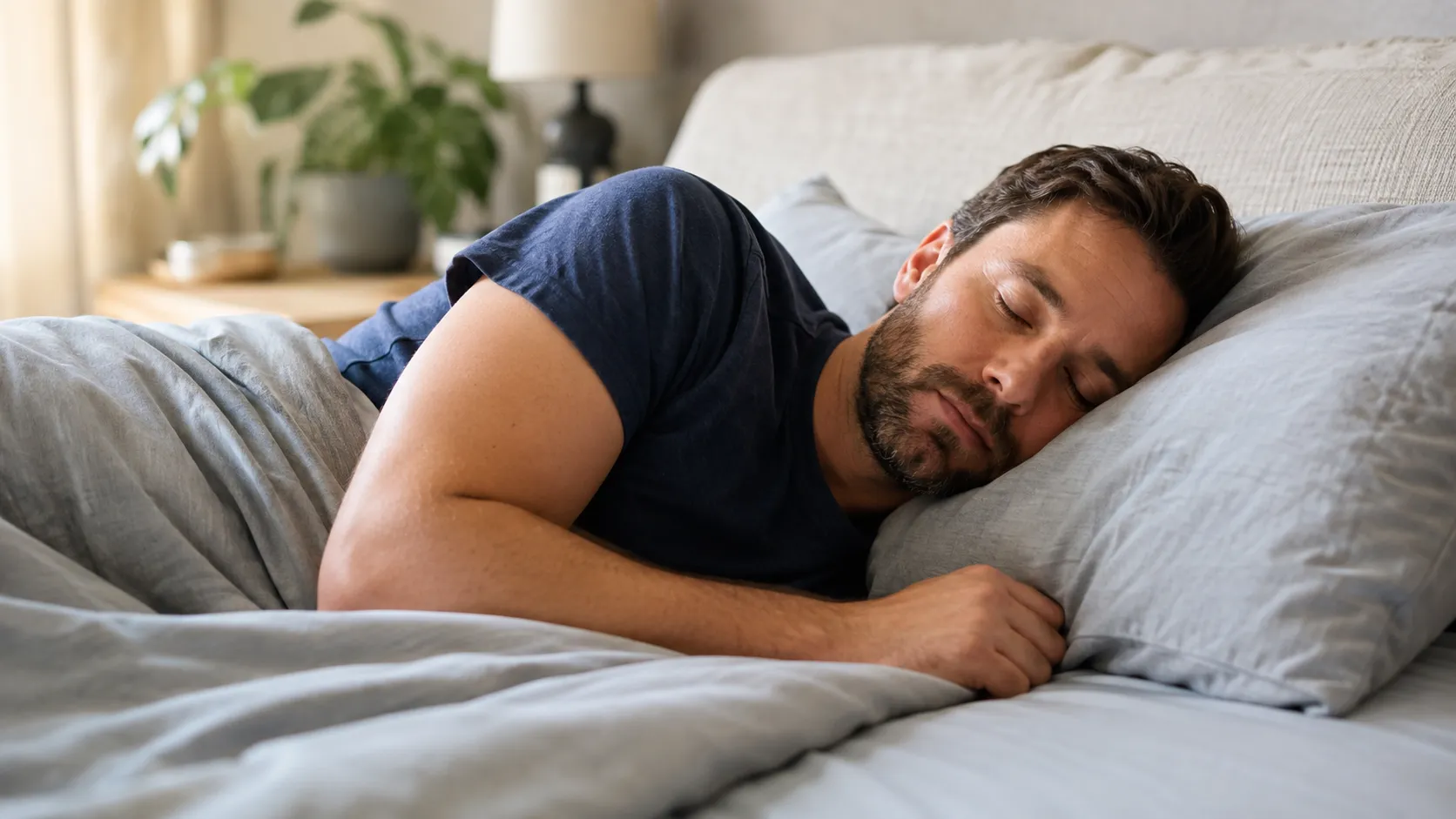
How much sleep do Americans actually get each night? For many people, getting enough sleep can be a challenge and our latest survey shows that shorter nights are pretty common. As part of a survey conducted by Bohemian Research, MultiPolls was one of the respondent apps used to collect answers from people across the United States. In total, 504 respondents answered one simple question: “How many hours do you sleep on average?” Here’s what they told us.
More than half reported sleeping less than 7 hours
Overall, 52.4% of respondents said they sleep less than seven hours on average. That includes 22.8% who said they sleep less than 5 hours and another 29.6% who selected 6 hours.
In fact, 6 hours was the most common answer in the entire survey. Another 19.8% of respondents said they sleep 8 hours, while 16.1% reported getting 7 hours of sleep on average. So for more than half of the people who took part, a typical night meant fewer than seven hours of sleep.
Women reported shorter sleep more often than men
The results also showed a difference between women and men. Among women, 55.2% reported sleeping less than seven hours, compared with 49.3% of men. The median reported sleep was also slightly different: 6 hours for women and 7 hours for men.
When looking at approximate averages, however, the difference was smaller — around 6.6 hours for women and 6.7 hours for men.
Who was most likely to sleep less than 7 hours?
Age made a noticeable difference too. Respondents aged 45–59 were the most likely to report sleeping less than seven hours. In this group, 63.4% selected either “less than 5 hours” or “6 hours.”
Among respondents aged 60 and older, the share was 58.6%.
Shorter sleep was less common among younger groups:
- 45.7% of respondents aged 30–44 reported less than seven hours.
- 40.0% of respondents aged 18–29 reported the same.
Among the age groups included in the survey, younger respondents were therefore less likely to report shorter sleep than those aged 45 and above.
Education level showed a difference too
The survey also found a difference based on education. Among respondents with a bachelor’s degree or higher, 37.7% reported sleeping less than seven hours.
Among respondents without a bachelor’s degree, the share was notably higher at 56.2%. The survey does not tell us why these differences exist, but it shows how reported sleep patterns varied between groups.
US sleep survey: the results at a glance
Here are the main findings:
- 52.4% of respondents reported sleeping less than 7 hours on average.
- 29.6% said they usually sleep 6 hours, making it the most common answer.
- 22.8% reported sleeping less than 5 hours.
- 19.8% said they sleep 8 hours on average.
- 55.2% of women reported less than 7 hours of sleep, compared with 49.3% of men.
- Among respondents aged 45–59, 63.4% reported sleeping less than 7 hours.
- Among respondents with a bachelor’s degree or higher, 37.7% reported less than 7 hours of sleep.
What would you answer?
How many hours do you usually sleep? Sleep is just one of the many everyday topics people can share their opinions on through MultiPolls. The app features surveys about everything from lifestyle, shopping and entertainment to brands, products and wider social topics. And because MultiPolls is a paid survey app, you can earn rewards while sharing your opinions. If you’re looking for paid surveys, want to take surveys for money, or simply like answering questions and comparing your experiences with others, MultiPolls gives you an easy way to take part. By completing surveys in the app, you can get paid to take surveys while contributing to research like the US sleep survey you just read. Download MultiPolls, start taking paid surveys and make your opinion count. Your answers could be part of our next story.
About the survey
The survey was conducted on April 22, 2026 by Bohemian Research through its respondent platform MultiPolls.